


WRITTEN BY MADI BENNION

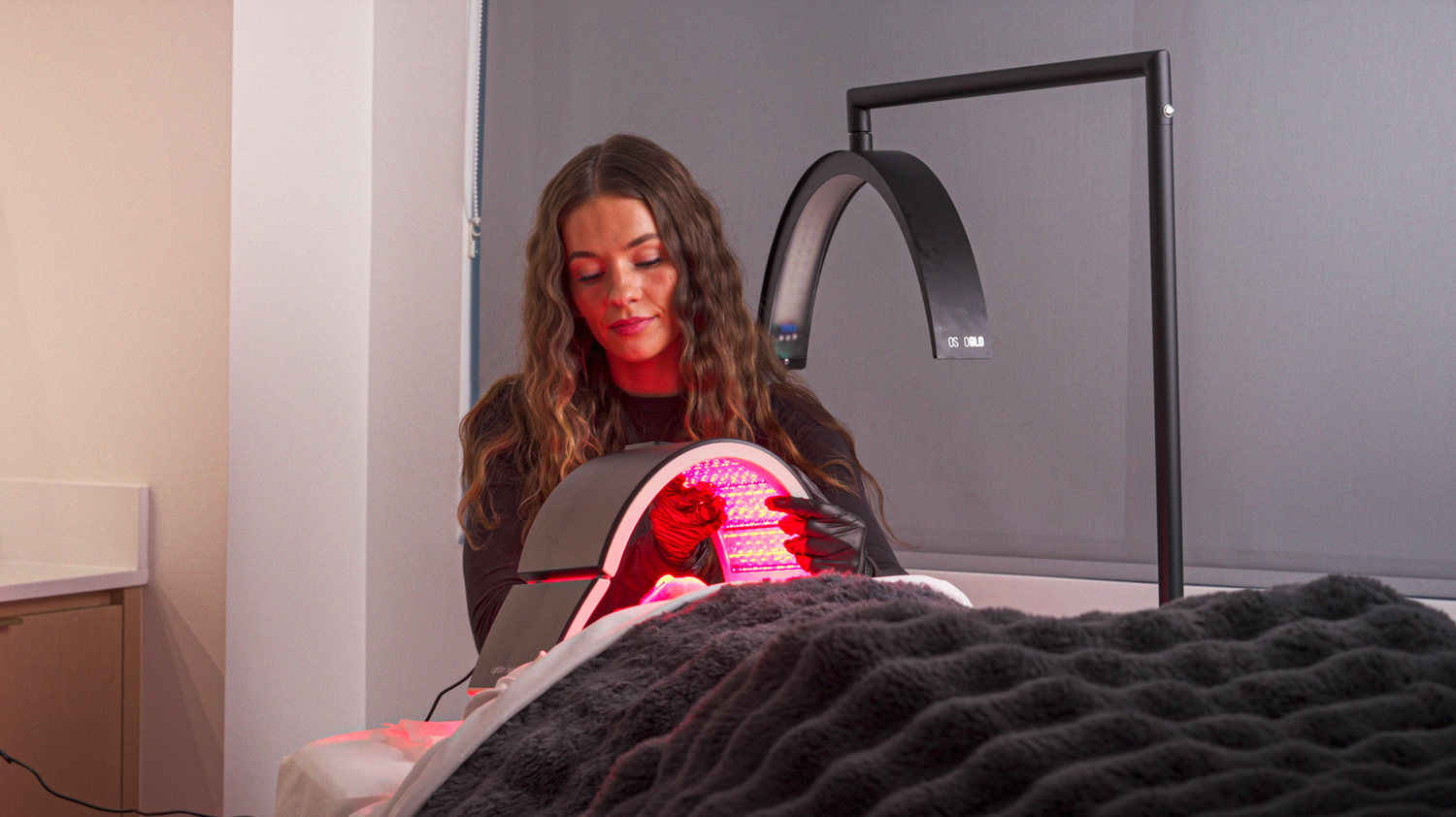
As an esthetician, I use red light therapy all the time in my treatment room because it’s such an easy addition that can make a real difference. I love incorporating it into acne treatments, anti-aging treatments, and post-procedure healing.
One of my favorite things about red light is that clients don’t have to rely strictly on seeing me to experience the benefits. Being able to use red light consistently at home between appointments helps maintain the progress we’re making in the treatment room and keeps their skin on track. I always tell my clients that great skin comes from consistency, and I love that there are options to continue supporting their results even when they’re not in my chair.
However, as wellness-maxxing continues to gain traction, there's a lot of noise in the space when it comes to red light. It seems like every day there is a new device to choose from, all paired with strong claims that will have you thinking red light may be the cure-all to everything.
With so many options available, I want to help you break it down: where to start, what actually matters, and how to realistically integrate red light into your routine without feeling overwhelmed.
Not all red light devices are created equal.
The science behind red light comes down to something called photobiomodulation: light at specific wavelengths gets absorbed by your cells and kickstarts processes like collagen production, circulation, and cellular repair. But for it to work, the wavelength has to be within the correct range. Red light (around 630–660 nm) tends to work on the surface. Think skin texture, tone, and fine lines. Near-infrared (roughly 810–850 nm) goes deeper, reaching muscle and joint tissue, making it a popular choice for pain relief and muscle recovery. A device that only offers one wavelength is only solving one problem.
What you should buy depends on what you’re targeting.
Skin concerns:
Look for a mask or panel, like the HigherDOSE Red Light Face Mask, in the shorter red wavelength range (630-660 NM), designed for facial use specifically.
Muscle recovery and inflammation:
Wavelengths (810-850 NM) to ensure it penetrates deep enough to reach muscle and joint tissue.
Sleep and nervous system regulation:
A panel or mat that offers full-body exposure. The HigherDOSE PEMF Pro Mat layers two of the most powerful recovery technologies, pulsed electromagnetic field therapy and far infrared heat, with 25 pounds of amethyst and obsidian crystals for the ultimate at-home reset.

"I think everyone should be supplementing with red light. It's not just anti-aging—it fuels your mitochondria, offsets the blue light we're drowning in, and reconnects us to something ancient. It's a sunset you can access even when you don't have the time or the sky for one,"
— Lauren Berlingeri
Co-CEO of HigherDOSE.
Just remember, to reap the benefits, red light must fall within the correct range. When you’re shopping, beware of anything that doesn’t disclose its actual wavelength and third-party data to back it up. It is also important to invest in something you’ll actually stay consistent with. Consistency is what makes the noticeable difference, so if sitting with a mask for 20-30 minutes a few times a week isn’t realistic for your lifestyle, opt for a panel or something that lets you multitask instead.
Red light isn't a trend—it's a tool. And like any tool, it only works if you actually use it. Start small, stay consistent, and find a ritual you'll actually stick to.
About the author: Madi Bennion, owner and lead esthetician at Mad Skin, a premier medical spa in Lehi, UT. She's spent her career committed to real, visible results, one that treats skin concerns by looking at the person as a whole, not just the surface.



Leave a comment
This site is protected by hCaptcha and the hCaptcha Privacy Policy and Terms of Service apply.